Scenic Routes Worth Taking
By Priya Nair9 min readDiscover stage
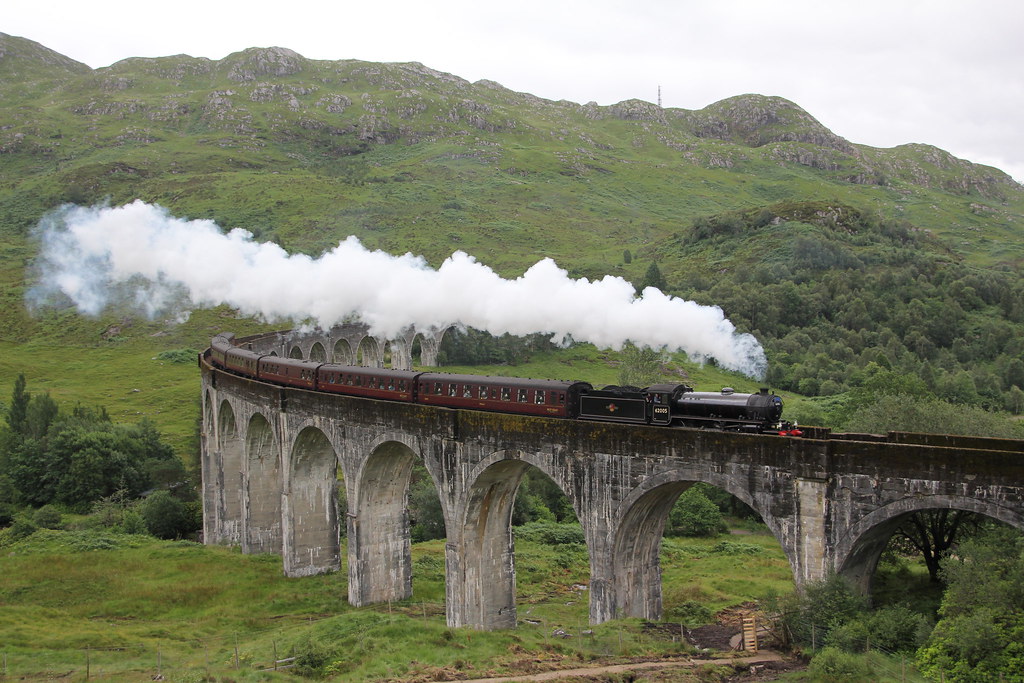
Photo: 96tommy / CC BY
On certain trains, coastal roads and ferry crossings, the destination is almost beside the point. Here is how to choose a seat, a time of day, and when the slow route genuinely beats the fast one.
Most transport exists to erase the space between two points as efficiently as possible. A small number of routes reverse that logic entirely, and the space between the points becomes the reason for the trip. A coastal railway that hugs a cliff edge for an hour, a ferry crossing that turns a strait into an event, a mountain road that switches back so many times the destination town stops mattering. These routes ask to be taken slowly, and the ones that do it well are worth planning a day around rather than squeezing in as an afterthought.
What makes a route worth the extra time
The best scenic routes tend to run parallel to a coastline, a river gorge, or a mountain range for a sustained stretch, rather than offering a single dramatic viewpoint and then flattening out. Sustained interest matters more than a peak moment, because a peak moment can be seen in a photograph and a sustained stretch cannot really be substituted for at all.
Choosing a seat
On a train or ferry with an obvious scenic side, which side that is usually depends on the direction of travel, not a fixed rule, so it is worth checking the specific line rather than assuming. Coastal railways often favour one side consistently regardless of direction, since the sea only sits on one side of the track. Ferries crossing narrow straits are more forgiving, since both rails tend to offer something.

Timing the journey
Light changes everything on a scenic route. Coastal roads and railways generally look best in the low light of early morning or late afternoon, when the sun sits at an angle rather than overhead, and midday travel on the same route can feel surprisingly flat by comparison. Mountain roads have their own logic, since cloud tends to build through the afternoon in many ranges, making an earlier departure the more reliable choice for clear views.
- Favour early morning or late afternoon departures on coastal routes
- Ask locally which side of a train or boat is considered the scenic side
- Allow slack at the far end in case weather delays a mountain crossing
- Treat a scenic route as the day's plan, not a leg squeezed between two other things

Choosing the slow route over the direct one is a small act of priority setting, a decision that the getting there matters as much as the arrival. It tends to change how the rest of a trip feels too, making the traveller more attentive to smaller, similar decisions elsewhere, including the way a city is best seen once evening falls and its character shifts.
Keep going
More from DISCOVER
Hidden corners, scenic routes and the places that reward a detour.
Back to DISCOVERRelated guides

Hidden Places Worth the Detour
The half hour off the main road that turns out to be the part you remember.
Read guide
Beautiful Cities to Explore on Foot
Some cities only make sense at walking pace. What they have in common.
Read guide
Unexpected Weekend Destinations
Cities that rarely top a list and are usually better for it. And cheaper.
Read guide